Filters
Sort Best selling
-
LED Surface-mounted Spotlight Largo Matt Black | 1× GU10 | Tilting -
LED Surface-mounted Spotlight Largo White | 2× GU10 | Tiltable -
LED Surface-mounted spotlight Faro White Gold | GU10 | Tiltable In stock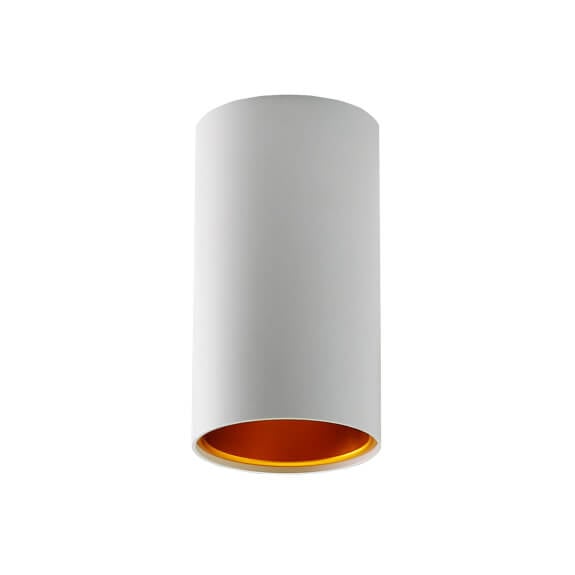
LED Surface-mounted spotlight Faro White Gold | GU10 | Tiltable
€14,95
-
LED Surface-mounted spotlight Faro Black and Gold | GU10 | Tiltable In stock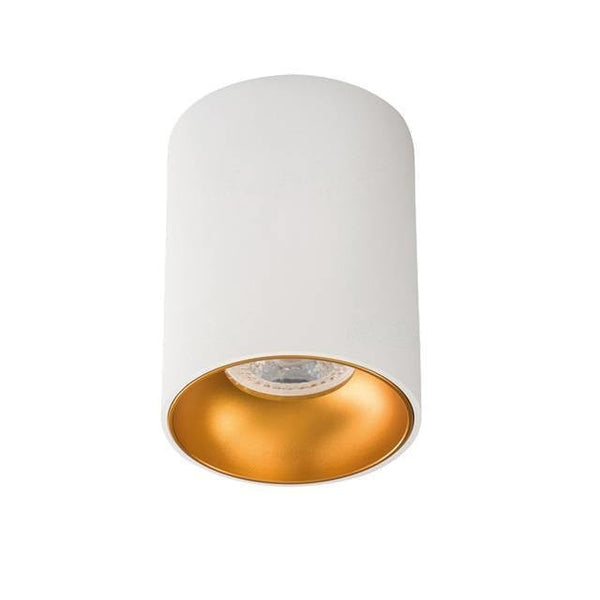
LED Surface-mounted spotlight Faro Black and Gold | GU10 | Tiltable
€14,95
-
LED Surface-Mounted Spotlight Quadro Matte Black | Square -
LED Track Spot Vetra Matt Black | CCT Dimmable | 10/20/30W | 3-Phase -
LED Surface-mounted Spotlight Mivo Matt Black | GU10 | 1-Phase Track -
LED Surface-mounted Spotlight Largo White | 3× GU10 | Tiltable -
LED Surface-Mounted Spotlight Sento Matt Black | GU10 | 3-Phase Track


More about Surface-mounted spotlights
You screw a surface-mounted spot onto the ceiling instead of into it. This is the solution when recessed installation is not possible: with a concrete ceiling without space above it, with a roof with insulation directly behind it, or in a rented house where you don't want to drill holes. You do compromise on aesthetics—the spot visibly protrudes—but you gain ease of installation and can remove it later without leaving marks.
Tilting or fixed
A tilting surface-mounted spot can be directed. This is exactly what you want above a kitchen counter, against a bookcase, or on a painting. A fixed spot shines straight down and creates a calmer ceiling appearance. For general room lighting, fixed is sufficient; as soon as you want to illuminate something specific, choose tilting.
One, two, or three light points
A bar with two or three spots in one fixture provides more light and more directions from a single connection point. Useful if there is only one central junction box and you still want to illuminate both a worktop and a seating area. A single spot is more discreet and easier to distribute throughout the space.
GU10 and the light source
Our surface-mounted spots work with GU10 bulbs. Most do not include the bulb, allowing you to choose the light color and beam spread yourself. A narrow beam of 36 degrees creates an accent; a wide beam of 60 degrees or more illuminates a surface evenly.
On track
If you want to be able to slide the spots, a track system is worthwhile. We have surface-mounted spots for 1-phase and 3-phase tracks, with 3-phase allowing you to switch multiple groups separately. Also check out pendants: they are available in the same track version, so you can combine them.
Also known as surface-mounted luminaire or surface downlight
A surface-mounted spot is also called a surface-mounted luminaire, ceiling spot, or spot bar if it has multiple heads. English terms you might encounter are surface mounted spotlight, surface downlight, and ceiling spotlight. If it's on a track, it's called a track spot or track light. All operate on the same principle: the fixture is mounted ON the ceiling instead of IN it.
Frequently asked questions
What is the difference with a recessed spot?
A recessed spot disappears into the ceiling and requires space above it—usually at least two to four centimeters. A surface-mounted spot is mounted on top and does not require that space. Otherwise, the light is the same.
Can a surface-mounted spot be used in the bathroom?
Only if the IP rating allows it, and then outside the direct splash zone. For directly above a shower, it's better to look at recessed spotlights with IP65.
How many surface-mounted spots do I need?
The same rule of thumb as for recessed spots: approximately one to one and a half meters apart, and sixty centimeters from the wall. If you are illuminating a worktop, hang them slightly in front of the cabinets so that you are not standing in your own shadow.
Are they dimmable?
The fixture itself may or may not be dimmable, depending on the light source. Screw in a dimmable GU10 and use a suitable Triac dimmer. For models with integrated LED, this information is included in the specifications.